
Why Laser-Cut Accessories are a High-Margin Venture
Launching a successful commercial storefront requires identifying a manufacturing niche that balances minimal material setup costs with exceptional premium pricing potential. Personalized apparel accessories and structural jewelry sit perfectly at this intersection. Whether your design studio focuses on creating localized geometric patterns for regional boutiques or fulfillment of bulk wholesale orders, utilizing a modern laser engraver for wood and colored acrylics provides a permanent, flawless finish that consumer-grade printing methods or vinyl decals cannot replicate.
Industry veterans identify the accessory customization niche as a primary driver of workshop cash flow due to several structural advantages:
-
High Profit Multipliers: Geometric and organic colored acrylic earrings frequently cost under $1.50 per pair to physically manufacture but easily command a retail price point of $18–$35 at high-end artisan craft fairs.
-
Permanent Surface Integrity: Unlike painted coatings that peel or plastic backings that scratch, an advanced diode laser engraving machine vaporizes materials cleanly, engraving crisp patterns that elevate the jewelry’s premium branding.
-
Rapid Order Fulfillment: Utilizing high-capacity production hardware means intricate lace-like patterns or complex monograms can be cut in a matter of 2 to 5 minutes, facilitating agile on-the-spot customizations at pop-up markets.
-
Diverse Material Versatility: Studios can seamlessly transition production between architectural laser cut acrylic (opaque and colored grades) and organic hardwoods to build multi-category seasonal collections.
While traditional studios once relied on a dedicated co2 laser engraver for full-spectrum organic material processing, modern high-power diode technology now covers 90% of standard jewelry production needs at a fraction of the upfront equipment cost, drastically lowering the barrier to entry for first-time studio founders.
Jewelry Product Catalog and Revenue Projections
To build a resilient B2B or B2C customization studio, your product catalog must target diverse pricing thresholds and material aesthetics. Offering a mixed-material selection protects your enterprise from localized inventory shortages and captures distinct consumer segments.
| Product Category | Material Selection | Bulk Blank Cost | Average Retail Price | Net Profit per Unit | Target Sales Channel |
| Structural Earrings | Premium opaque laser cut acrylic (3 mm) | $0.80–$1.50 | $18–$32 | $17–$30 | Etsy, Independent Boutiques |
| Organic Pendants | Birch, Walnut, Premium Cherry | $0.60–$1.20 | $15–$35 | $14–$33 | Gift Shops, Craft Markets |
| Metallic Blank Bands | 304 Stainless Steel Sheet | $2.50–$5.00 | $30–$65 | $27–$60 | Shopify, Wholesale Contracts |
| Custom Pet ID Tags | Anodized Aluminum / Bare Steel | $1.00–$2.00 | $12–$25 | $11–$23 | Amazon Custom, Pet Stores |
By managing your transactions through an independent web framework instead of over-relying on high-fee centralized marketplaces, you effectively circumvent platform processing fees, driving net manufacturing margins up to the 75–85% range. For founders starting with a desktop unit, this return profile makes wood laser engraved jewelry one of the lowest-risk entry points into the custom goods market.

Choosing the Right Hardware: The Genesis-F Structural Advantage
The hardware engine you select dictates your studio’s material handling limits and long-term production throughput. While traditional entry-level setups force owners to invest separately in a co2 laser engraver for organic cutting and a dedicated fiber unit for metal marking, selecting a high-power compressed diode laser engraver offers an ideal, versatile alternative for growing commercial workspaces.
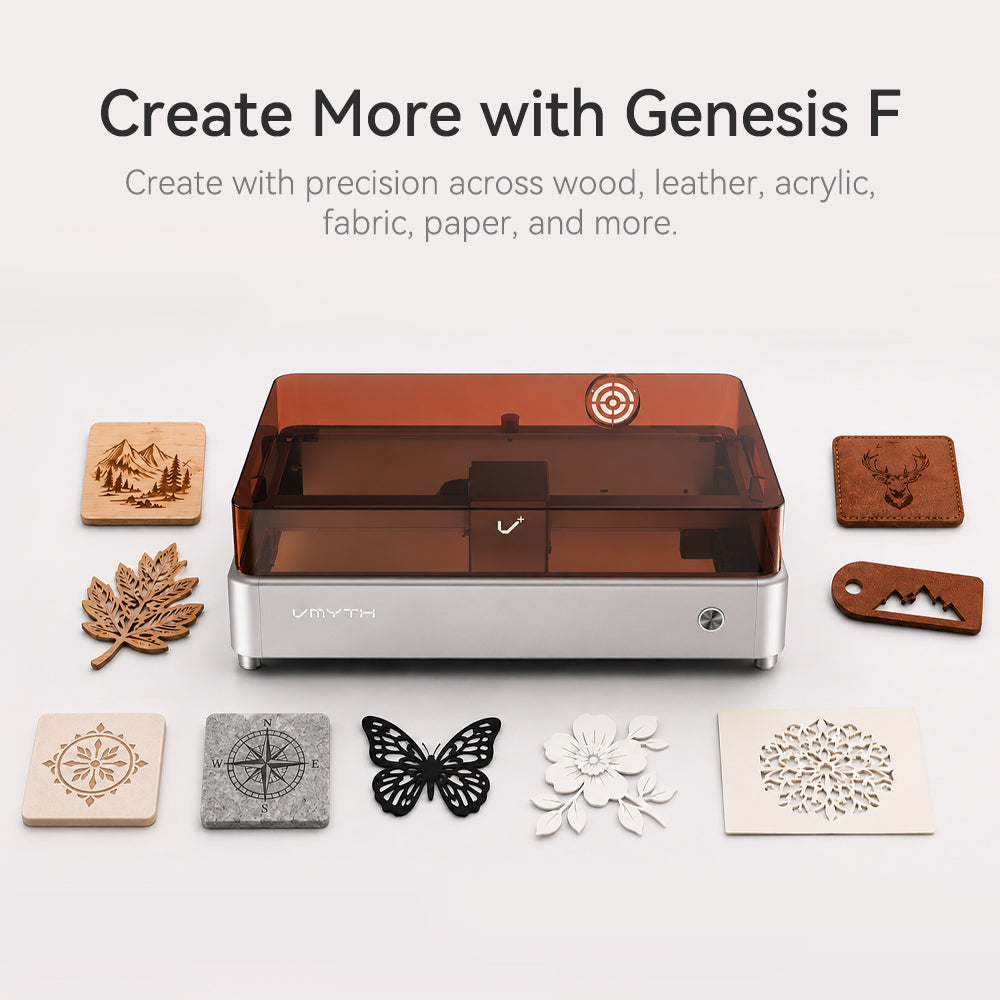
The Genesis-F series stands out as the best laser engraver for beginners and high-volume commercial workshops by blending heavy-duty architecture with high precision, purpose-built for small-batch jewelry and accessory production:
Industrial-Grade Frame Stability
Engineered with a rigid, high-density industrial aluminum alloy bed, the Genesis-F supports high-velocity vector travel up to 24,000mm/min with zero frame vibration. Translated to jewelry production, this means you can manufacture 60+ pairs of intricate earrings per hour—cutting production time in half compared to budget hobby machines. This elimination of frame flex is vital when cutting tiny, sub-millimeter holes for earring jump rings or delicate necklace bails.
Ultra-Fine Spot Resolution
The specialized 20W optical power module focuses down to an ultra-precise <0.2mm laser spot size with an execution accuracy of 0.01mm. This gives designers the ability to execute flawless wood engraving paths and hyper-detailed filigree work on delicate surfaces without scorching the substrate—a critical feature for premium-priced statement jewelry.
Unrivaled Material Penetration
Most desktop machines on the market experience severe edge degradation when cutting materials past 10mm. The Genesis-F acts as an industrial-grade wood laser cutting machine, slicing cleanly through 15mm linden wood in a single pass. This allows you to manufacture structural earring display trees and branded packaging boxes alongside your jewelry lines, expanding your product catalog without additional equipment costs.
Cross-Platform Software Integration
The mainboard provides plug-and-play compatibility with industry-standard laser engraving software, giving your team the operational flexibility to use laser grbl software on Windows or build sophisticated multi-layered canvas nests in LightBurn across macOS and Windows. For new studio owners, this eliminates proprietary software lock-in and reduces staff training time.
For founders evaluating entry-level equipment, you can find a full breakdown of performance specs and use cases in our complete guide to the best beginner laser engraver for small custom businesses.
Design Software Workflow: From Concept to Clean Cut
A highly organized design-to-production pipeline prevents workshop bottlenecks and maintains optimal stock levels during peak quarters. Professional jewelry manufacturers generally employ the following four-stage engineering sequence:
-
Vectorization & Line Optimizations: Designers convert raw sketches into crisp vector formats (SVG or DXF) using platforms like Adobe Illustrator or Inkscape. To guarantee robust structural integrity, maintain a minimum wall thickness of 0.5mm to 1.0mm on fine interior cutouts.
-
Nesting and Parameter Allocation: Import your finished designs into your chosen software laser engraver platform (such as LightBurn). Use nesting arrays to pack multiple geometric shapes tightly onto a single sheet of wood for laser cutting or colored acrylic to minimize waste margins.
-
Executing Alignment and Previews: Place your material block on the honeycomb bed. Utilize the Genesis-F’s integrated Red-Light Crosshair Positioning module to visually trace the outer frame boundary on your stock material, completely eliminating spatial guesswork.
-
Post-Processing & Clean Assembly: After the cutting run completes, remove any protective masking tape. Lightly sand the edges of your hardwood pieces or wipe down colored acrylic surfaces before hand-assembling the jewelry using hypoallergenic stainless steel jump rings and earring hooks.

Building Your Boutique Brand Identity
In competitive digital landscapes, your brand presentation separates low-cost generic sellers from premium lifestyle studios that command luxury pricing. Elevating your perceived value relies on a cohesive identity system:
-
Cohesive Packaging Assets: Shipping artisan earrings in plain plastic bags signals a lack of professionalism. Investing in branded cardboard jewelry display cards, custom-stamped tissue paper, and eco-friendly structural boxes elevates the unboxing experience, easily recovering the nominal packaging cost through high customer retention rates. You can engrave your logo directly onto packaging materials using the same wood engraving equipment you use for production.
-
High-Fidelity Studio Photography: Clean, brightly lit flat-lay photographs captured against minimalist, neutral backdrops are essential. Additionally, incorporating lifestyle images featuring real models allows commercial wholesale buyers to visualize the weight and drape of your laser engraved products.
-
Transparent Brand Storytelling: Modern consumers connect deeply with authentic workshop processes. Sharing short video clips of your production workflow or showing the Genesis-F slicing through hardwood sheets on social channels builds deep consumer trust and substantiates your premium pricing.
Etsy and Shopify SEO: Maximizing B2B Visibility
To ensure organic visibility on search platforms, your product listings must be optimized to match exactly what high-volume buyers search for. Incorporating relevant search terms into your title structures, meta descriptions, and backend tags will capture valuable organic search traffic.
-
Strategic Title Architecture: Always lead your product listings with your most descriptive, high-value keyword combinations. For instance: “Gold Geometric Statement Earrings | Premium Laser Cut Acrylic Jewelry | Minimalist Handcrafted Gift for Her | Lightweight Artisan Accessories”
-
Comprehensive Tag Deployment: Use every available keyword slot on your platform. Mix general category tags like “laser engraving” with hyper-focused material descriptions such as “laser cut wood”, “personalized stainless jewelry”, and specific gifting terms.
-
Optimizing for Rich Snippets: Structure your informational blog posts and documentation using clear, direct heading markers (H2 and H3). This clear hierarchical framing allows search engine algorithms to crawl your content efficiently and feature your studio as a trusted source for commercial custom jewelry production.
Scaling via High-Volume B2B Wholesale Pipelines
While individual consumer sales provide reliable everyday revenue, expanding into commercial B2B wholesale channels is how a modern manufacturing studio drives exponential scaling.
Independent retail boutiques, upscale museum gift shops, and online subscription curators constantly seek out unique, high-margin inventory that mainstream mass manufacturers do not offer. When approaching corporate buyers or boutique curators, present a clean, professional “line sheet” outlining your production capacity, material options (including durable laser engraving stainless steel assets), bulk tiered discount milestones, and realistic manufacturing turnaround times.
For studios working with the Genesis-F, your ability to produce both wood and metal custom pieces under one roof becomes your core B2B selling point—most competing small studios only specialize in one material category, allowing you to easily market yourself as a comprehensive, better laser than xtool s1 or other entry-level alternatives for automated batch production.
FAQ
Q: Can a high-power diode laser system cleanly handle acrylic cutting tasks for jewelry production?
A: Yes, for opaque and colored acrylic grades. Utilizing the advanced 20W compressed optical beam of the Genesis-F series allows you to cut crisp, smooth edges on a wide variety of colored and opaque laser cutting acrylic sheet stocks. The 0.01mm resolution guarantees clean, professional edges with minimal post-processing. For fully transparent clear acrylic, we recommend professional CO2 laser systems, as diode lasers are optimized for pigmented substrates.
Q: Is a dedicated co2 laser engraving machine required to process delicate wood jewelry?
A: Not anymore for most standard studio needs. While traditional studios historically relied on expensive, bulky CO2 cabinets for processing organic elements, modern high-power diode engineering has closed the gap for everyday jewelry production. The Genesis-F acts as an incredibly efficient wood laser engraver, providing clean cuts up to 15mm and deep, dark engraving details on all popular hardwoods without the complex mirror alignments or specialized water-cooling systems associated with CO2 hardware. For studios focused exclusively on thick hardwood and clear acrylic, a CO2 unit remains a valid secondary upgrade.
Q: How do I choose the best wood for laser engraving and cutting fine accessories?
A: For structural components and earrings, always opt for dense, high-grade hardwood plywoods such as birch, cherry, walnut, or premium 1/8 plywood options. Ensure your materials are completely flat and free of internal void spaces or heavy adhesive pockets, which can interfere with the consistency of your laser cuts. For surface engraving-only pendants, thinner veneer-grade woods work beautifully and reduce material costs.
Q: Can the Genesis-F process custom metal jewelry components alongside wood and plastics?
A: Yes. While standard hobby lasers cannot mark metallic substrates, the high energy density of the Genesis-F 20W optical module allows it to handle specialized industrial tasks, including deep laser engraving stainless steel components and generating high-contrast markings on anodized aluminum charms. This dual-material capability lets you offer mixed-media jewelry lines with a single machine.
Ready to maximize your accessory studio’s commercial production capabilities? Empower your studio’s custom workflow with industrial precision, ultra-fine spot detail, and market-leading material handling versatility.
[Click here to download our comprehensive Genesis-F 300+ Material Commercial Processing Guide] to unlock verified power, velocity, and lens spacing presets to launch your profitable accessory line today!
Share:
Is the Genesis-F the Best Beginner Laser Engraver for Your Small Business?
50 High-Margin CO2 Laser Engraved Products